Metal Deco

High-Quality Printing Inks for Metal Decoration

Precision in Metal Deco: From Substrate Selection to LED-UV Curing

The demands placed on modern metal packaging are constantly increasing. Extreme mechanical deformation during deep drawing, thermal stress in autoclaves, and increasingly stringent regulatory requirements present complex challenges for printing companies and brand owners. A deep understanding of the chemical and physical interactions in the printing process is essential to avoid scrap and ensure process stability.

Would you like to standardize your color processes in sheet metal printing and reduce downtime?

Jetzt Farbberatung anfordern
Precision in Metal Deco: From Substrate Selection to LED-UV Curing

The Foundation: Interactions Between Substrate, Adhesion, and Deformation

Unlike paper or film, bare metal poses a particular challenge in the printing process. Radiation-curing UV and LED-UV inks do not develop sufficient adhesion on uncoated metal. For direct printing without pretreatment, only conventional, heat-drying ink systems can be used.

In industrial practice, painted substrates with a special basecoat are the standard. This primer serves as an essential adhesion promoter. When selecting the appropriate basecoat, the subsequent processing plays a key role. While a standard basecoat is sufficient for three-piece cans, whose body is simply formed and welded, deep-drawn two-piece cans are subjected to extremely high mechanical forces. A special basecoat developed specifically for this purpose ensures that the entire paint system withstands the stretching without the layers separating from one another.

Safe Printing Inks for the sterilization process

A critical step in the production of canned foods is the subsequent heat sterilization in autoclaves, which usually takes place at temperatures between 121 and 131 degrees Celsius. Any physical failure of the Printing Inks becomes apparent immediately after the product passes through the autoclave.

If the flexibility of the coating system is not adapted to the deformation, microscopic hairline cracks form in the coating film during deep drawing. During the subsequent treatment, hot steam penetrates through these microcracks and seeps beneath the coating. The result is that the ink peels off the substrate. Since this process step occurs only after the product has been filled, such a failure leads to the loss of the finished product. The use of high-strength inks and pigments approved for the sterilization process is therefore an essential requirement.

Safe Printing Inks for the sterilization process

Brilliant shades of white for a strong brand presence

On clear base coats, opaque white provides the visual foundation for subsequent Printing Inks. Pure titanium dioxide without additives often appears dull to the human eye when applied to a metallic substrate. To achieve a brilliant overall appearance, the white is carefully nuanced during the manufacturing process.

Interestingly, aesthetic requirements vary considerably from region to region. In European markets, a subtle violet tint dominates, conveying a particularly cool, clean white to the viewer. In Asia, on the other hand, a red tint is established; while it appears slightly pink to European eyes, it is perceived locally as a warm, high-quality white. Highly pigmented opaque white systems with high opacity also make it possible to reduce the film thickness, which minimizes the risk of the paint film cracking during forming.

Brilliant shades of white for a strong brand presence

Efficiency in Transition: Plant Engineering, Energy Management, and Haptics

The transition from conventional heat dryers to UV and LED-UV systems is fundamentally changing production processes. The key factors involved relate to space requirements, power supply, and process control.

Space Requirements and Setup Time

While conventional drying ovens can be up to 35 meters long, UV modules operate in a very small space. In addition, with UV systems, the final color can be assessed directly on the machine, whereas thermally dried inks do not reach their final shade until after they have passed through the oven.

Energy Efficiency

The need to reduce dependence on gas infrastructure is prompting many companies to switch to electric curing systems. Modern LED-UV systems in the 385- to 395-nanometer range also operate without producing ozone, drastically lower energy consumption, and reduce heat input into the substrate.

Downtime

With radiation-curing inks, there is no risk of ink skinning in the ink fountain or on the rollers during extended machine downtime, which reduces cleaning downtime.

In addition to efficiency, direct printing on sheet metal is gaining importance over paper labels. With aggressive substances such as paint strippers or cleaners, spilling droplets would render a paper label illegible, whereas a directly printed metal surface remains chemically stable. In terms of design, matte-gloss combinations are also gaining relevance. The interplay between the sheet metalโ€™s inherent metallic sheen, a high-gloss protective coat, and a partially printed matte coat creates striking contrasts. From a technical standpoint, this process requires that the base protective coating used be completely free of wax- or silicone-based additives so that the matt coating applied afterward can form a permanent bond.

Future-Proofing Through Compliance: FCM and Global Standards

The manufacture of food packaging is subject to strict legal requirements, which are continually becoming more stringent due to regulations such as the European Packaging Directive. Ink systems designed for this application (Food Contact Materials, FCM) do not contain raw materials that could potentially migrate or critical photoinitiators.

Adjusting formulations requires forward-looking development work. To avoid supply shortages in the event of sudden legislative changes, continuous market monitoring is necessary. For purely technical containers used to store chemical products such as solvents, specialized coating systems continue to be used, which are primarily designed for maximum resistance to aggressive media.

Future-Proofing Through Compliance: FCM and Global Standards

Standardization as the Key to Process Stability

One of the biggest challenges in printing is the parallel operation of different types of equipment. When a job needs to be flexibly switched between a conventional line, a UV press, and an LED-UV press, differences in pigment bases often result in visible color variations.

This is where Zeller Gmelinโ€™s technical concept comes into play. By using identical pigment formulations across all premium ink seriesโ€”from heat-drying systems to LED-UV variantsโ€”color values and formulations remain consistent across all systems. This standardization simplifies color communication, reduces the effort required for color formulation, and allows for maximum flexibility in machine utilization.

Avoid duplicate formula adjustments and the need to store leftover ink. Our specialists will analyze your current printing processes and show you how to standardize your color management across different types of equipment.

FAQ

Radiation-curing UV and LED-UV inks require a molecular bond to the surface. Since bare metal does not provide this bonding bridge, a special basecoat (primer) is required. Without this primer, only conventional, heat-curing ink systems can be used.

If the Printing Inks develop fine microcracks during forming (e.g., deep drawing), hot steam can penetrate through these cracks during the sterilization process (at 121 ยฐC to 131 ยฐC). The steam penetrates the ink film, causing the layers to peel away from the substrate after autoclaving.

Pure titanium dioxide often appears dull to the human eye when applied to metallic surfaces. Adding small amounts of color pigments creates a more brilliant visual effect. In Europe, a violet tint is usually preferred for this purpose, while a red tint is common in Asian markets.

LED UV inks enable extremely short drying times directly on the press and significantly reduce energy consumption compared to conventional drying ovens. In addition, there is no reliance on gas infrastructure, no ozone is produced, and the

Heat input to the sheet metal is minimized.

All premium paint seriesโ€”whether conventionally heat-curing (MetalDry), UV-curing (MetalCure), or LED-UV (MetalFlash)โ€”use exactly the same pigment bases. This allows mixing formulas to be transferred 1:1 between drying processes without any visible color deviations.

Branded companies often use metal packaging when a product needs to be well protected and presented in a high-quality manner. It is also sustainable, as it is 100 percent recyclable without any loss of quality. With its high-quality finish, it attracts a great deal of attention from consumers.

With high-quality, sophisticated products and a flexible, independent corporate structure, Zeller+Gmelin is today the safe alternative for the metal decorating market.

Applications

  • Metal packaging
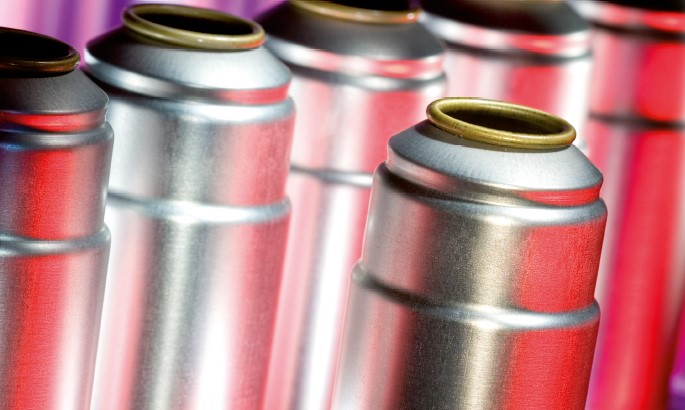
  • Aerosol cans
  • Aluminum tubes /
  • Bottles
  • Crown cap
  • Closures

Information material

Metal Deco

Download PDF โ€ข 1.8 MB

Success stories

Modern FCM technology

In line with stricter legal requirements for printing on food packaging

Ever stricter legal requirements are increasing the demands for the production of legally compliant food packaging. The right choice of ink and coating systems is therefore all the more important.

Based on current developments and the latest raw materials, Zeller+Gmelin presents you with the right solution. Modern FCM ink systems contain significantly fewer migratable substances. Together with the use of special networked initiators, Zeller+Gmelin has minimized the potential for migration. The molecular weight of the cross-linked photoinitiators (approx. 1000 Daltons) is several times higher than that of conventional photoinitiators (< 400 Daltons). They also contain polymerizable groups that participate in the curing process and are thus firmly integrated into the chemical structure of the printing ink film. These properties make the FCM systems from Zeller+Gmelin extremely safe!

Our FCM technology is more than just "low migration". It is characterized by its high-quality composition, coupled with the highest requirements and lowest migration behaviour, as well as excellent printing properties.

The advantage of conformity

  • Nestlรฉ Standard St-80.001 (Printing Inks for Food Packaging)
  • Without bisphenol A and raw materials based on bisphenol A
  • Swiss Commodities Ordinance 817.023.21
  • GMP Regulation (EU) 2023/2006
  • EU Regulation 10/2011 in its latest version
UV standard diagram
UV standard
Zeller+Gmelin FCM Colors diagram
Zeller+Gmelin FCM Colors

LED technology

As a specialist for radiation-curing printing ink systems of the highest quality, we also offer high-quality printing ink in the field of LED UV technology.

LED technology is particularly interesting for environmentally conscious companies that not only want to conserve resources but also protect the environment. LED technology offers an economic and ecological advantage.

LED technology has developed into a true alternative solution in the field of radiation curing! In principle, the polymerization process of an LED ink is identical to that of a UV system. The difference is that an LED system dries with a specific wavelength. The cross-linking reaction is therefore triggered by excitation in a very narrow wavelength range. Industrial LED systems can operate in a wavelength range from 365 nm to 405 nm. The most common systems are those that emit at 385 nm or 395 nm.

Environmentally friendly + energy efficient

Our printing inks are highly reactive systems which, thanks to their formulation, do not require any kind of volatile raw materials. This makes our printing inks solvent-free and emission-free! LED technology also completely eliminates the need for mercury vapor lamps. This means that you no longer have any mercury in your production process and are therefore protecting the environment. By using a specific wavelength when using LED spotlights, no ozone is produced on the machine, the heat input is reduced to a minimum and no critical UV-C radiation is emitted. This makes our LED ink solutions a user and environmentally friendly system!

  • No ozone formation
  • mercury-free technology
  • No critical UV-C radiation
  • Minimal heat input
  • Low energy requirement
LED technology illustration

Profitable + Powerful

LED lamps are ready for immediate use, eliminating standby and heat-up times. You can operate the lamps in "switch on-switch off" mode and thus clock your processes. In addition, LED units can be partially switched due to their design. This enables LEDs that are not required to be switched off outside the print area. LED lamps also have a much longer service life without any loss of power. This extends maintenance cycles many times over.

  • High efficiency
  • Long service life
  • No loss of performance
  • Zone switching
  • tactile
  • No warm-up time
  • No standby time

Analytics Center

Zeller+Gmelin has an in-house analytics center that was set up specifically for the development of low-migration inks, for raw material controls and for the internal testing of test samples.

We now also have the option of liquid chromatography with a high-resolution quadrupole time-of-flight mass spectrometer for even more precise and sensitive analyses. In addition, we always have our low-migration ink series tested and evaluated by independent analysis institutes. This double testing enables us to offer printers, packaging buyers and consumers the greatest possible product safety.

Numerous analyses have shown that when used properly with our low-migration ink series, the legal limit value of 10 ppb can not only be safely adhered to in migration tests with 95% ethanol, but can also be significantly undercut.

  • Liquid chromatography with high-resolution quadrupole time-of-flight mass spectrometer (LC-QToF-MS)
  • Gas chromatography with mass spectrogram (GC-MS)
  • Liquid chromatography with mass spectrogram (LC-MS)
  • Quality control of the raw materials we use
  • Internal evaluation of test samples
Analytics Center laboratory

Mixing with Z-Base Colors

Based on years of positive experience with monopigmented color mixing systems, we offer a monopigmented color mixing system for all our color series.

We work with the same monopigmented color mixing systems in our production facilities. This ensures fast and effective color communication between the manufacturer and the print shop. Regardless of whether PANTONEยฎ spot colors or other common mixing color systems need to be mixed, our highly pigmented color mixing systems always achieve the best possible result. Even fan-independent shades can be optimally adjusted.

Advantages

  • PANTONEยฎ tones can be blended better
  • Color mixtures are more colorful and purer, as only the pigments actually required for a color mixture are used
  • the higher color intensity enables printing with low layer thicknesses
  • Reduced dot gain in halftone printing
  • Greater flexibility when setting the color intensity of spot colors
  • fewer color shifts when viewing the printed products under different light sources (metamerism)
  • Color communication between the color manufacturer and the customer is simpler and therefore faster thanks to the use of monopigmented mixing systems
  • Mixing recommendations are available for all PANTONEยฎ shades
  • Color formulation, mixing and dosing systems are available in various expansion stages
  • Reduction of storage costs
  • Lower disposal costs for leftover paint
Color wheel for Z-Base Colors