

UV-LED Offset

UV-LED Offset

The modern UV-LED offset ink series for commercial applications

LED technology has become a true alternative solution in the field of radiation curing! Our printing inks are highly reactive systems which, thanks to their formulation, do not require any kind of volatile raw materials. This makes our printing inks solvent-free and emission-free!
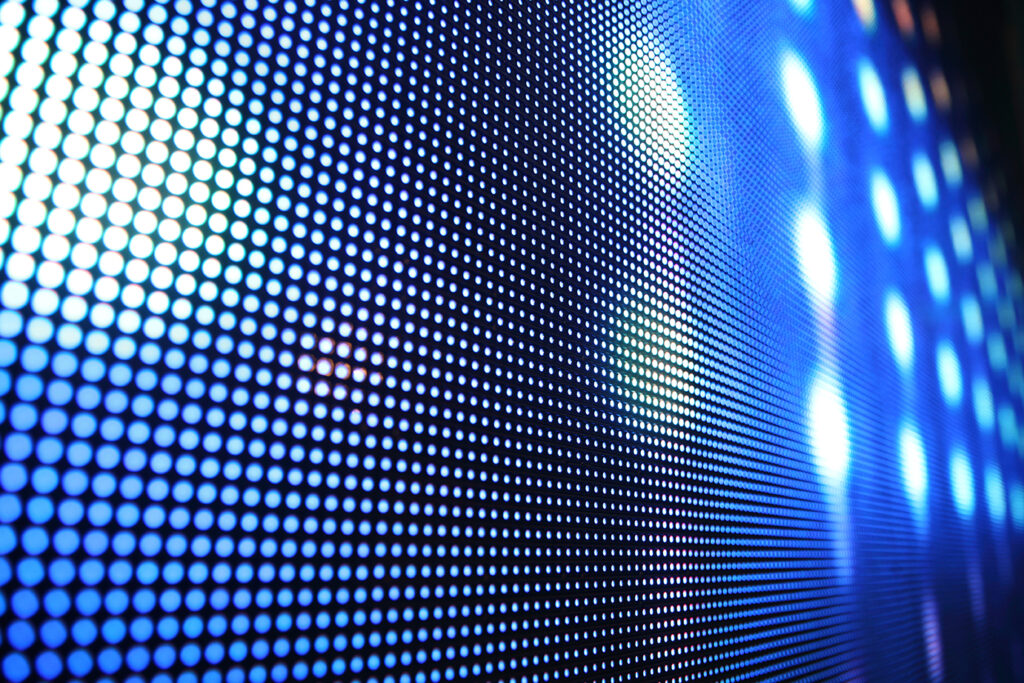
LED technology also completely eliminates the use of mercury vapor lamps. This means that you no longer have any mercury in your production process and therefore protect the environment. The use of a specific wavelength when using LED lamps means that no ozone is produced on the machine, heat input is reduced to a minimum and no critical UV-C radiation is emitted. This makes our LED ink solutions a user and environmentally friendly system!

Advantages

  • No ozone formation
  • mercury-free technology
  • No critical UV-C radiation
  • Minimal heat input
  • Low energy requirement

UVALUX LED U540 Commercial

The modern LED offset ink series for commercials and packaging

  • Outstanding printing performance
  • Highest printing speed
  • High color intensity
  • High scratch and abrasion resistance Area of application: non-food packaging, non-food labels

TORACURE LED W580

The stable UV LED ink series for waterless offset printing

Waterless offset printing is often used for the production of labels and packaging on various substrates. Special printing plates are used here, which differ significantly from water-based offset printing.

The waterless offset printing plates have an ink-repellent silicone layer on the surface, which has a low surface tension. The underlying layer is ink-receptive and therefore a printing component. As a result, dot gain is kept extremely low and there are no fluctuations throughout the printing process. These properties are enhanced by Toracur W580 and lead to a high quality print result. Toracur W580 can be easily cured with all types of UV, whether LED-UV, UV-Hg or H-UV.

  • DualCure: Universal drying with UV-Hg and UV-LED
  • Outstanding printing performance
  • High color intensity
  • High scratch and abrasion resistance
  • Areas of application: Non-food packaging, non-food labels, mailings, forms/commercials

Information
LED-UV-Offset

Herunterladen PDF • 901 KB

Modern FCM technology

In line with stricter legal requirements for printing on food packaging

Ever stricter legal requirements are increasing the demands for the production of legally compliant food packaging. The right choice of ink and coating systems is therefore all the more important.

Based on current developments and the latest raw materials, Zeller+Gmelin presents you with the right solution. Modern FCM ink systems contain significantly fewer migratable substances. Together with the use of special networked initiators, Zeller+Gmelin has minimized the potential for migration. The molecular weight of the cross-linked photoinitiators (approx. 1000 Daltons) is several times higher than that of conventional photoinitiators (< 400 Daltons). They also contain polymerizable groups that participate in the curing process and are thus firmly integrated into the chemical structure of the printing ink film. These properties make the FCM systems from Zeller+Gmelin extremely safe!

Our FCM technology is more than just "low migration". It is characterized by its high-quality composition, coupled with the highest requirements and lowest migration behaviour, as well as excellent printing properties.

The advantage of conformity

  • Nestlé Standard St-80.001 (Printing Inks for Food Packaging)
  • Without bisphenol A and raw materials based on bisphenol A
  • Swiss Commodities Ordinance 817.023.21
  • GMP Regulation (EU) 2023/2006
  • EU Regulation 10/2011 in its latest version
UV standard diagram
UV standard
Zeller+Gmelin FCM Colors diagram
Zeller+Gmelin FCM Colors

LED technology

As a specialist for radiation-curing printing ink systems of the highest quality, we also offer high-quality printing ink in the field of LED UV technology.

LED technology is particularly interesting for environmentally conscious companies that not only want to conserve resources but also protect the environment. LED technology offers an economic and ecological advantage.

LED technology has developed into a true alternative solution in the field of radiation curing! In principle, the polymerization process of an LED ink is identical to that of a UV system. The difference is that an LED system dries with a specific wavelength. The cross-linking reaction is therefore triggered by excitation in a very narrow wavelength range. Industrial LED systems can operate in a wavelength range from 365 nm to 405 nm. The most common systems are those that emit at 385 nm or 395 nm.

Environmentally friendly + sustainable

Our printing inks are highly reactive systems which, thanks to their formulation, do not require any kind of volatile raw materials. This makes our printing inks solvent-free and emission-free! LED technology also completely eliminates the need for mercury vapor lamps. This means that you no longer have any mercury in your production process and are therefore protecting the environment. By using a specific wavelength when using LED spotlights, no ozone is produced on the machine, the heat input is reduced to a minimum and no critical UV-C radiation is emitted. This makes our LED ink solutions a user and environmentally friendly system!

  • No ozone formation
  • mercury-free technology
  • No critical UV-C radiation
  • Minimal heat input
  • Low energy requirement
LED technology illustration

Profitable + Powerful

LED lamps are ready for immediate use, eliminating standby and heat-up times. You can operate the lamps in "switch on-switch off" mode and thus clock your processes. In addition, LED units can be partially switched due to their design. This enables LEDs that are not required to be switched off outside the print area. LED lamps also have a much longer service life without any loss of power. This extends maintenance cycles many times over.

  • High efficiency
  • Long service life
  • No loss of performance
  • Zone switching
  • tactile
  • No warm-up time
  • No standby time

Analytics Center

Zeller+Gmelin has an in-house analytics center that was set up specifically for the development of low-migration inks, for raw material controls and for the internal testing of test samples.

We now also have the option of liquid chromatography with a high-resolution quadrupole time-of-flight mass spectrometer for even more precise and sensitive analyses. In addition, we always have our low-migration ink series tested and evaluated by independent analysis institutes. This double testing enables us to offer printers, packaging buyers and consumers the greatest possible product safety.

Numerous analyses have shown that when used properly with our low-migration ink series, the legal limit value of 10 ppb can not only be safely adhered to in migration tests with 95% ethanol, but can also be significantly undercut.

  • Liquid chromatography with high-resolution quadrupole time-of-flight mass spectrometer (LC-QToF-MS)
  • Gas chromatography with mass spectrogram (GC-MS)
  • Liquid chromatography with mass spectrogram (LC-MS)
  • Quality control of the raw materials we use
  • Internal evaluation of test samples
Analytics Center laboratory

Mixing with Z-Base Colors

Based on years of positive experience with monopigmented color mixing systems, we offer a monopigmented color mixing system for all our color series.

We work with the same monopigmented color mixing systems in our production facilities. This ensures fast and effective color communication between the manufacturer and the print shop. Regardless of whether PANTONE® spot colors or other common mixing color systems need to be mixed, our highly pigmented color mixing systems always achieve the best possible result. Even fan-independent shades can be optimally adjusted.

Advantages

  • PANTONE® tones can be blended better
  • Color mixtures are more colorful and purer, as only the pigments actually required for a color mixture are used
  • the higher color intensity enables printing with low layer thicknesses
  • Reduced dot gain in halftone printing
  • Greater flexibility when setting the color intensity of spot colors
  • fewer color shifts when viewing the printed products under different light sources (metamerism)
  • Color communication between the color manufacturer and the customer is simpler and therefore faster thanks to the use of monopigmented mixing systems
  • Mixing recommendations are available for all PANTONE® shades
  • Color formulation, mixing and dosing systems are available in various expansion stages
  • Reduction of storage costs
  • Lower disposal costs for leftover paint
Color wheel for Z-Base Colors